Bakery box freshness depends on moisture, air exposure, temperature, packaging fit, and the recipe inside. Those factors matter when you pack everyday cupcakes and cookies. They also determine how well your holiday treats hold their texture between baking, boxing, and gifting.
For home bakers and small bakery owners, a useful gift box starts with a storage plan. Crisp biscotti, soft chocolate cookies, and frosted cupcakes need different handling. Putting them together without separating them can undo the care you put into baking.
KitchenDance supplies disposable bakery boxes, clear bakery containers, and foil pans for presenting and transporting your home-baked goods. This guide connects the original freshness questions with seven holiday recipes, so you can choose treats and package them with their storage needs in mind.
Key Takeaways: Bakery Box Freshness and Holiday Gifting
- Cool baked goods completely before closing their packaging to reduce trapped steam and protect the texture you worked to create.
- Keep crisp cookies separate from soft cookies, moist loaves, and cupcakes so different textures do not share the same storage space.
- Match storage temperature to the filling and frosting, and never assume a decorative box makes a perishable recipe shelf-stable.
- KitchenDance offers bakery boxes, clear containers, and foil pans that help you match your packaging to different baked goods and gifting needs.
- Give recipients clear storage instructions, and use your actual recipe and packaging combination to set expectations rather than promising universal freshness.
What Controls Freshness Inside a Bakery Box?
Moisture, oxygen, heat, and storage time all affect the quality of baked goods. Packaging helps manage exposure, but it cannot make every recipe last for the same number of days. A crisp cookie and a filled cupcake need separate decisions.
The University of Minnesota Extension explains how packaging and storage conditions influence food quality. Use those principles to plan your gift assortment, then follow storage guidance suited to the specific food. Quality and food safety are related, but they are not interchangeable.
Moisture Changes Cookie and Cupcake Texture
Moisture management means protecting the texture each recipe is supposed to have. Soft cookies should stay soft, while biscotti and palmiers should keep their crunch. Storing moist and crisp items together allows moisture to move between them.
Start by separating recipes into texture groups. Keep soft crinkles together, put biscotti in their own packaging, and give lemon loaves a separate covered space. Paper dividers help prevent contact, but they do not create a moisture barrier between foods sharing the same air.
Cooling Before Packing Reduces Trapped Steam
Complete cooling helps you avoid trapping steam around your baked goods. A surface that feels cool does not always mean a thick loaf has cooled through. Check the whole item before fitting a lid or closing inner packaging.
Build cooling time into your schedule instead of treating boxing as the next immediate step after baking. For cupcakes, cool the cakes before frosting, then make sure the decorations can withstand handling. Avoid sealing warm cookies just to finish an order sooner.
Closures and Inner Packaging Manage Air Exposure
A closed presentation box should not automatically be treated as an airtight storage container. Check how the actual package closes and what its manufacturer says about its intended use. A display window alone does not establish a moisture or oxygen barrier.
For cookies that need more protection during storage, use suitable food-safe inner packaging before placing them in a gift box. KitchenDance bakery boxes provide presentation and transport options. Match the inner packaging to the cookie instead of asking the outer box to do every job.
Temperature Must Match the Entire Recipe
Storage temperature depends on every component, including frosting, filling, and decorations. A cupcake with a perishable topping needs a different plan from a plain, crisp cookie. A lid or ribbon does not change that requirement.
University of Minnesota Extension’s guidance on frostings and dessert fillings explains why formulation matters. Do not assume every buttercream or cream cheese frosting is safe at room temperature. Follow reliable recipe-specific guidance, and check your local requirements when preparing goods for sale.
How Do You Protect Cupcake Freshness?
Cupcake freshness starts with a fully cooled cake, appropriate frosting storage, and packaging that protects the decoration. Cupcakes can join your holiday gifting plan, but they should travel separately from crisp cookies when their moisture or temperature needs differ.
Choose enough height for the finished frosting, not just the unfrosted cake. Use a compatible cupcake insert to help keep each cupcake upright. KitchenDance’s bakery packaging assortment includes cupcake inserts and boxes in multiple sizes, giving you options for individual gifts and larger orders.
Pack Cupcakes Without Touching the Frosting
A suitable cupcake package holds the base steady while keeping the lid away from the frosting. Measure the finished cupcake and check the insert against your liner size before preparing a whole batch of boxes.
Set each cupcake into its opening without pressing on the decoration. Close the package gently and confirm that the lid clears the tallest point. Keep the box level during handoff. A snug insert helps with movement, but squeezing cupcakes into a shallow box can damage the finish.
Keep Perishable Cupcakes on Their Required Storage Schedule
Cupcakes with toppings or fillings that require refrigeration must stay under those conditions through storage and delivery. Packaging protects presentation, but it does not replace refrigeration or make a recipe safe for an unrefrigerated gift table.
Give the recipient specific handling instructions from the recipe you used. For a small bakery, make the instructions part of the order handoff. If the delivery plan cannot support the cupcake’s storage needs, choose a different treat rather than relying on the box for protection it cannot provide.
How Should You Plan Cookie Storage for Gift Boxes?
Cookie storage works more predictably when you separate cookies by texture and protect finished decorations. Keep soft cookies apart from crisp varieties, and store each type in packaging suited to the recipe until you assemble the gift.
For a mixed assortment, individually packaged groups let you share several recipes without placing every cookie in the same storage environment. Use parchment between appropriate layers to prevent contact. Allow icing to dry fully before stacking, and avoid loading heavy cookies on top of delicate ones.
Choose Box Size Using the Finished Treats
Box fit should reflect the size, height, and fragility of your actual baked goods. A box’s outside dimensions do not tell you exactly how many cookies will fit. Cookie diameter, wrapping, dividers, and decorations all take up space.
Make a sample arrangement before packing the full batch. Confirm that the lid closes without pressure and that the treats cannot slide freely. KitchenDance clear bakery containers provide another presentation option when visibility and a protective lid suit your assortment.
Separate Storage Time From Display Time
Storage and display serve different purposes, so plan them separately. Keep each recipe under its required conditions before assembly, then arrange the gift close to the intended handoff. Do not use the appearance of a closed box as proof that the food remains fresh.
For small bakery packaging, write down the recipe, packaging choice, and intended storage conditions. Check how the actual combination performs before making freshness claims. Avoid applying one cookie’s storage guidance to every item in a mixed box, especially when the assortment includes cupcakes or moist loaves.
🎄 7 Holiday Pastry Recipes Worth Gifting This Season 🎄
1. Buttery Shortbread Rounds
Shortbread is the workhorse of holiday gifting. A short ingredient list and a tender texture make these rounds a useful starting point for your gift assortment.
Ingredients:
- 1 cup unsalted butter, softened
- 1/2 cup powdered sugar
- 2 cups all-purpose flour
- 1/4 tsp. salt
Instructions:
- Cream butter and powdered sugar until smooth.
- Stir in flour and salt until a soft dough forms.
- Roll dough into a 2-inch log, wrap, and chill for 1 hour.
- Slice into 1/4-inch rounds and bake at 325 °F for 14 to 16 minutes until edges are barely golden.
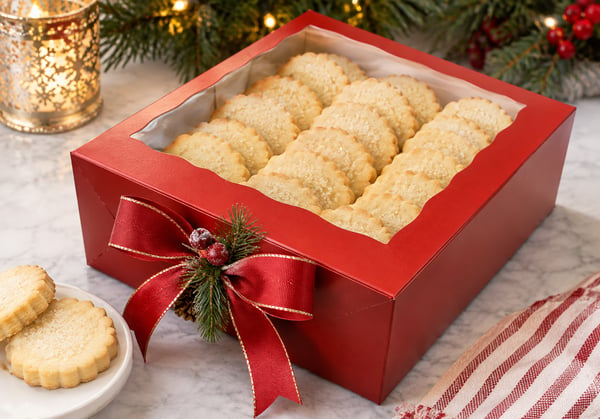
Packaging pick: Line a 10 x 10 x 4" Colored Lock Tab Box and arrange the shortbread rounds in a single layer. Leave enough room to close the box without pressing on the cookies.
Freshness connection: Cool shortbread completely before closing the box to avoid trapping steam. Keep these crisp cookies separate from soft crinkles and moist cupcakes. If you need an additional air and moisture barrier for storage, use suitable food-safe inner packaging rather than assuming the bakery box is airtight.
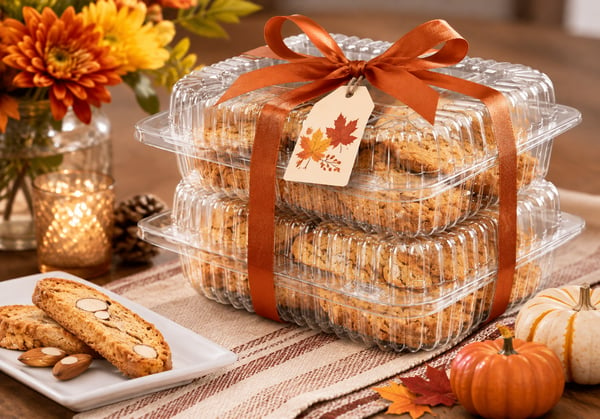
2. Almond Biscotti
Biscotti are twice-baked for a crunchy texture. Pair with coffee or hot chocolate for a thoughtful gift.
Ingredients:
- 2 cups all-purpose flour
- 1 cup granulated sugar
- 1 tsp. baking powder
- 3 large eggs
- 1 tsp. each vanilla and almond extract
- 1 cup toasted almonds, chopped
Instructions:
- Whisk flour, sugar, and baking powder. Beat eggs with extracts, fold into dry mixture, and stir in almonds.
- Shape into two flat logs and bake at 350 °F for 25 minutes.
- Cool 10 minutes, slice diagonally, then bake slices at 325 °F for 10 to 12 minutes per side.
Packaging pick: Arrange biscotti in an 21 oz. Rectangular Clear Clamshell Container with Barlock. The clear container shows off the biscotti. Lay the pieces flat if needed, leaving enough room to close the lid without pressing on them.
Freshness connection: Let biscotti cool completely after the second bake before closing the container. Package them separately from cupcakes and other moist baked goods so moisture does not soften their crunch. If you need an additional air and moisture barrier for storage, use suitable food-safe inner packaging rather than assuming the clamshell is airtight.
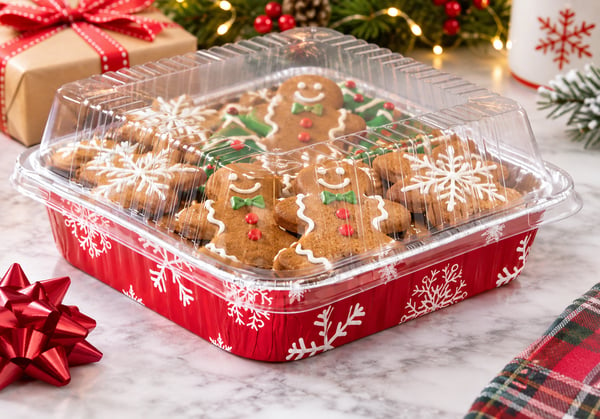
3. Classic Gingerbread Cookies
Ginger, cinnamon, and molasses fill the kitchen with that unmistakable seasonal aroma. Cut into festive shapes and decorated with royal icing, these cookies double as edible ornaments.
Ingredients:
- 3 cups all-purpose flour
- 1 1/2 tsp baking powder
- 1 tbsp. ground ginger
- 1 1/2 tsp. ground cinnamon
- 1/4 tsp. each ground cloves and salt
- 3/4 cup unsalted butter, softened
- 3/4 cup packed brown sugar
- 1 large egg
- 1/2 cup molasses
Instructions:
- Whisk flour, baking powder, and spices. Cream butter and brown sugar, then beat in egg and molasses.
- Gradually add dry ingredients, mix until smooth, wrap, and chill for 1 hour.
- Roll to 1/4-inch thickness, cut with holiday cookie cutters, and bake at 350 °F for 8 to 10 minutes.
Packaging pick: Arrange decorated gingerbread cookies in a 8" Square Aluminum Foil Holiday Cake Pan with Plastic Lid, placing parchment between layers. Leave enough room to fit the plastic lid without pressing on the icing.
Freshness connection: Let gingerbread cookies cool completely and allow their icing to dry before layering and covering. Check the icing rather than relying on one fixed drying time. Parchment keeps surfaces apart, but it does not provide an airtight seal or prevent moisture transfer between different cookies. Package gingerbread separately from moist baked goods.
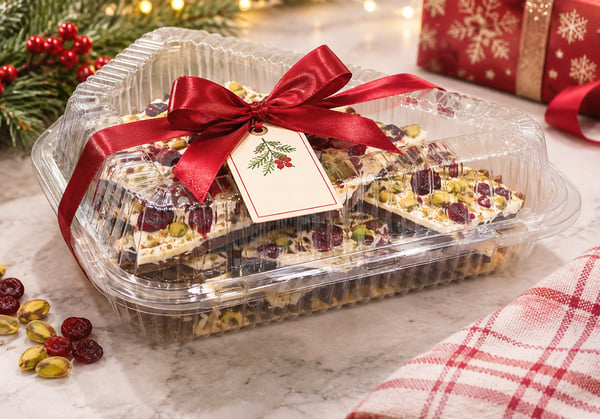
4. Cranberry Pistachio Bark
This no-bake confection needs preparation time plus 30 minutes of chilling. The red and green color combination is naturally holiday-ready, and it looks stunning broken into irregular pieces.
Ingredients:
- 12 oz. white chocolate chips
- 1/2 cup dried cranberries
- 1/2 cup shelled pistachios, chopped
- 1/4 tsp. flaky sea salt
Instructions:
- Melt white chocolate in a double boiler or microwave in 30-second intervals.
- Spread onto a parchment-lined sheet about 1/4-inch thick.
- Scatter cranberries, pistachios, and sea salt across the surface. Refrigerate 30 minutes, then break into pieces.
Packaging pick: Arrange the set cranberry pistachio bark in a Plastic Clamshell for Christmas Tree Shaped Pan for a holiday-themed presentation. Leave enough room to close the clamshell without pressing on the bark.
Freshness connection: Keep finished bark away from direct sunlight and heat during storage and delivery. Package it separately from moist baked goods. Because bark is a confection rather than a pastry, treat it as an optional addition to your baked assortment.
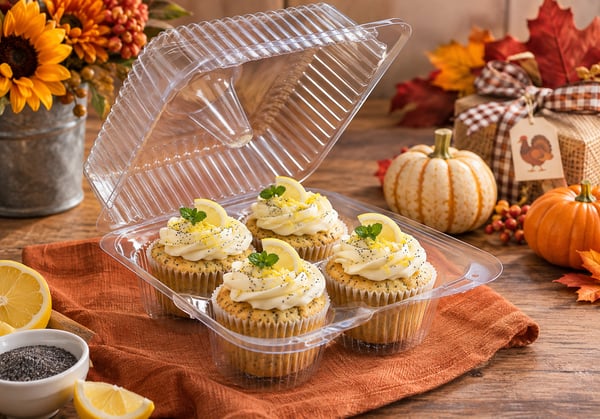
5. Lemon Poppy Seed Cupcakes
These lemon poppy seed cupcakes add a bright, citrusy flavor to your holiday assortment. Individual portions make them easy to arrange in a gift box.
Ingredients:
- 1 1/2 cups all-purpose flour
- 1 tbsp. poppy seeds
- 1 tsp. baking powder
- 1/4 tsp. salt
- 1/2 cup unsalted butter, softened
- 3/4 cup granulated sugar
- 2 large eggs
- Zest of 2 lemons
- 1/4 cup lemon juice
- 1/2 cup milk
Instructions:
- Preheat the oven to 350 °F. Line a standard 12-cup muffin pan with paper cupcake liners.
- Whisk together the flour, poppy seeds, baking powder, and salt.
- In a separate bowl, cream the butter and sugar until light and fluffy. Beat in the eggs one at a time, then mix in the lemon zest.
- Stir the lemon juice into the milk. Add the dry ingredients to the butter mixture in three additions, alternating with the milk mixture. Begin and end with the dry ingredients. Mix just until combined.
- Divide the batter among the liners, filling each about two-thirds full. If you have extra batter, bake it in additional lined cups rather than overfilling.
- Bake for approximately 18 to 22 minutes. Begin checking at 18 minutes. The tops should spring back lightly when touched, and a toothpick inserted into the center should come out clean.
- Let the cupcakes rest in the pan for 5 minutes, then transfer them to a wire rack to cool completely before decorating or packaging.
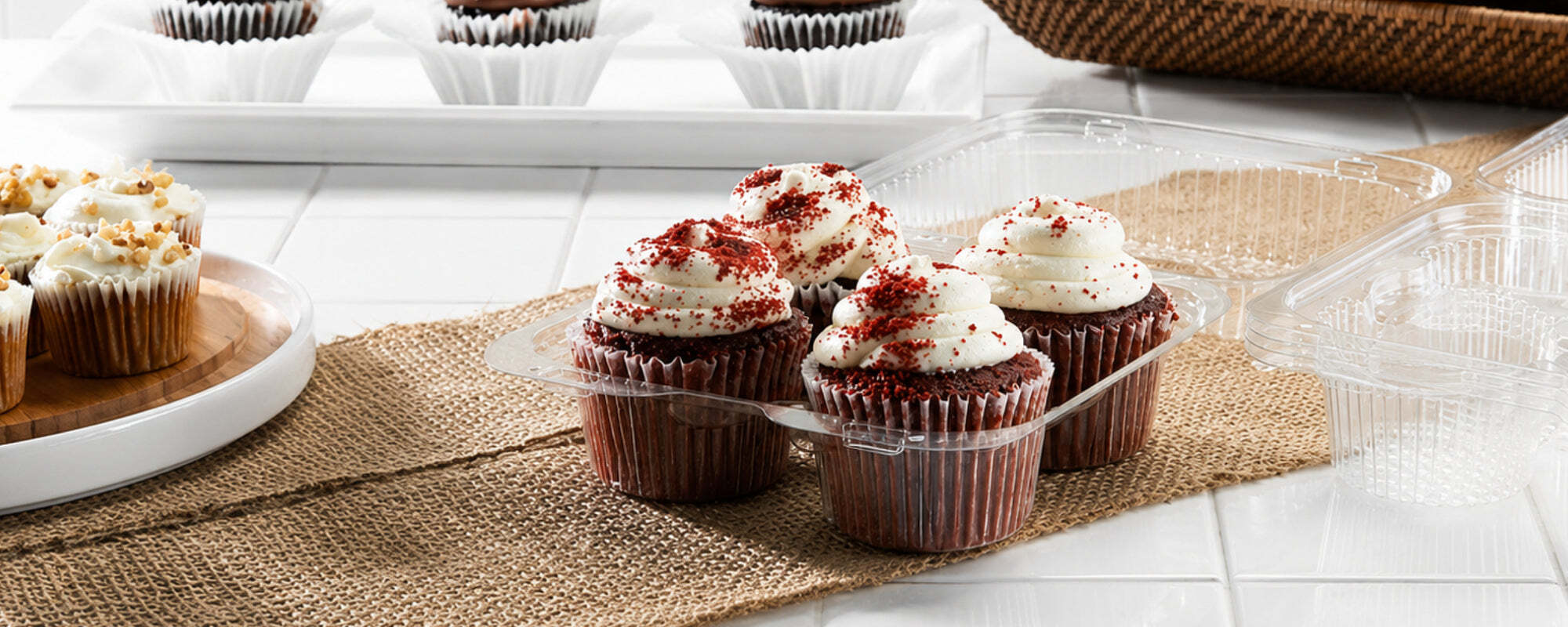
Packaging pick: Place cooled cupcakes in a 4-Compartment Plastic Cupcake Hinged Container with High Dome Lid, with one cupcake in each compartment. Check that the lid clears any frosting or decorations before closing it. Keep the container level during transport, and avoid stacking cupcakes.
Freshness connection: Package lemon cupcakes separately from crisp cookies so moisture does not soften the cookies. Cool the cupcakes completely before closing the container to reduce trapped steam. If you add frosting or filling, follow its storage requirements. The container protects presentation but does not replace refrigeration when required.
6. Chocolate Crinkle Cookies
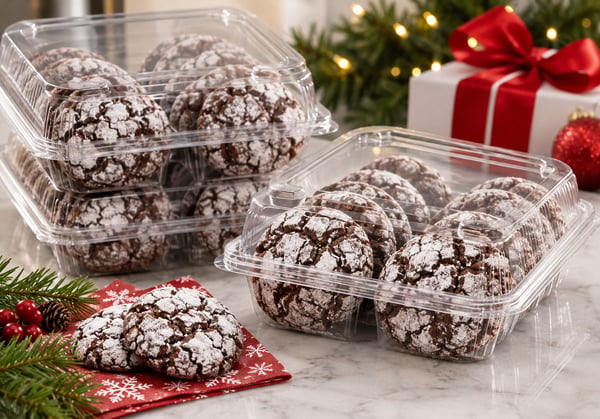
Rich, fudgy, and coated in powdered sugar, chocolate crinkles look like little snowballs. The crackled surface creates a striking contrast that makes them a standout in any box.
Ingredients:
- 1 cup unsweetened cocoa powder
- 1 1/2 cups sugar, 1/2 cup vegetable oil
- 4 large eggs, 2 tsp vanilla extract
- 2 cups all-purpose flour
- 2 tsp. baking powder, 1/2 tsp salt
- 1/2 cup powdered sugar for rolling
Instructions:
- Mix cocoa, sugar, and oil. Beat in eggs and vanilla. Stir in flour, baking powder, and salt.
- Chill dough for 2 hours. Roll into 1-inch balls, coat in powdered sugar.
- Bake at 350 °F for 10 to 12 minutes. Centers should still look slightly soft.
Packaging pick: Arrange chocolate crinkles in a 10-Count Rectangular Hinged Plastic Cookie Container. Leave enough room to close the lid without pressing on the cookies or disturbing their powdered-sugar coating.
Freshness connection: Cool chocolate crinkles completely before closing the container, and keep them separate from crisp biscotti and shortbread. In a mixed gift assortment, package crinkles separately to limit moisture transfer between cookie types. Avoid pressing another layer directly onto the powdered-sugar coating.
7. Cinnamon Sugar Palmiers
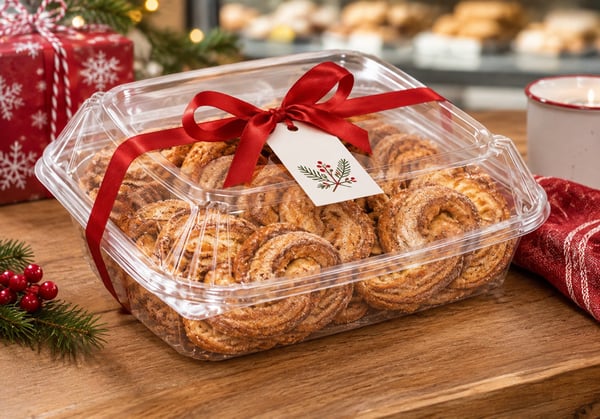
Palmiers use store-bought puff pastry, so they require almost no hands-on time. Cinnamon sugar transforms the layers into caramelized, flaky pastries that shatter with each bite.
Ingredients:
- 1 sheet frozen puff pastry, thawed
- 1/3 cup granulated sugar
- 1 tsp. ground cinnamon
Instructions:
- Mix sugar and cinnamon. Sprinkle half onto a clean surface, lay pastry on top, and sprinkle the rest over it.
- Roll both long edges toward the center. Chill 15 minutes.
- Slice into 1/4-inch pieces and bake at 400 °F for 12 to 15 minutes, flipping halfway.
Packaging pick: Place cooled palmiers in a 8 x 7 Square Hinged Plastic Bakery Container with High Dome Lid. Arrange the pastries without crowding, and check that the lid closes without pressing on their delicate layers.
Freshness connection: Allow palmiers to cool completely before closing the container to reduce trapped steam. Protect the flaky layers from crushing, and keep these crisp pastries separate from moist baked goods or frosted cupcakes.
Build a Holiday Gift Box Around Freshness Needs
A successful holiday assortment groups treats by compatible texture and storage needs. You can still give a varied selection, but separate inner packages or separate containers help each recipe retain its intended character. Think of the gift box as the presentation layer around that plan.
Pair shortbread and biscotti in separately wrapped portions, give crinkles their own space, and keep a lemon loaf covered in its pan. Cupcakes deserve a dedicated insert and suitable lid clearance. Keep any item needing refrigeration on its required schedule rather than adding it to a room-temperature assortment.
A Packing Routine for Home Bakers
A repeatable packing routine helps you catch problems before you tie the ribbon. Begin with clean hands, clean surfaces, and food-grade packaging. Set out the treats by recipe so you do not mix soft and crisp items by accident.
- Confirm each treat is fully cooled and decorations are ready for handling.
- Separate foods by texture and storage temperature.
- Add suitable inner packaging where the recipe needs an air or moisture barrier.
- Arrange treats without crowding or pressing on decorations.
- Check lid clearance and keep the finished box level.
- Add recipe-specific storage and handling instructions before handoff.
A Packing Routine for Small Bakery Owners
A consistent sample pack helps you turn individual packaging choices into a reliable workflow. Assemble one order using the actual product sizes, decorations, and packaging before preparing the rest. Confirm that staff can reproduce the arrangement without changing how the food is protected.
Record the storage instructions alongside the recipe and the package you used. Keep food requiring different temperatures separate throughout preparation and pickup. Check applicable local labeling and cottage food rules for sales. A seasonal presentation should not replace the handling information your customer needs after leaving the bakery.
Label Gifts With Useful Handling Information
Useful labels tell the recipient what is inside and how to store it. Include the date made, ingredients, and recipe-specific handling instructions. Identify relevant allergens from the ingredients you actually used, including any decorations or packaged toppings.
University of Minnesota Extension recommends these details in its homemade food gift guidance. For a mixed gift, keep each item’s instructions clear rather than assigning one storage rule to the whole assortment. A short note can prevent someone from treating a refrigerated cupcake like a crisp cookie.
FAQs About Bakery Boxes and Holiday Treat Freshness
Do Disposable Bakery Boxes Keep Cookies Fresh on Their Own?
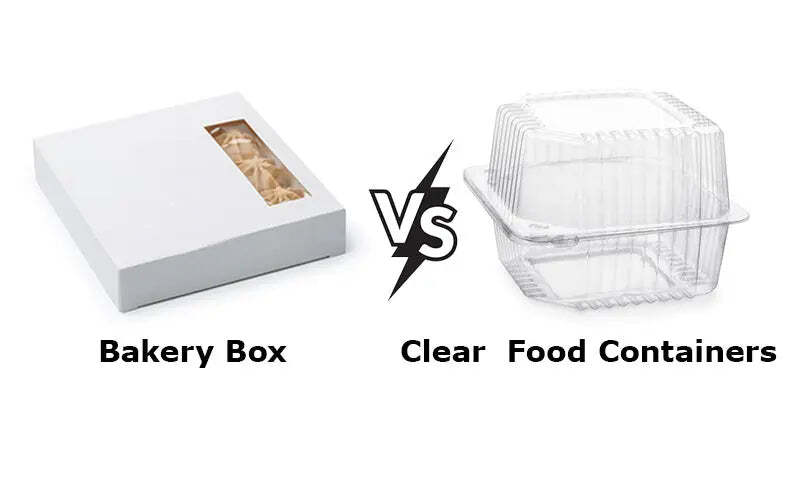
Disposable bakery boxes protect presentation and support transport, but their storage performance depends on construction and closure. KitchenDance offers paperboard boxes for bakery use. When your recipe needs an airtight barrier, use suitable inner packaging rather than assuming the presentation box provides one.
Can Cupcakes and Cookies Share a Holiday Gift Box?
Cupcakes and cookies can share a gifting theme, but they may need separate packages. Moist cupcakes can soften crisp cookies, and some frostings require refrigeration. Use a dedicated cupcake package and separately protected cookies when their texture or storage requirements differ.
How Long Will Home-Baked Goods Stay Fresh?
Freshness depends on the recipe, packaging, temperature, and handling, so one number cannot cover every gift assortment. Follow reliable guidance for each item. For bakery sales, assess the actual recipe and packaging combination before setting customer expectations about quality or storage time.
Which KitchenDance Packaging Works for a Mixed Assortment?
KitchenDance bakery boxes support gift presentation, while its clear bakery containers and foil loaf pans suit other shapes and serving needs. Choose using the finished treats. Separate crisp cookies, soft cookies, loaves, and cupcakes when their moisture or temperature requirements differ.
Can I Close a Foil Loaf Pan Immediately After Baking?
Let a loaf cool completely before closing its packaging so you do not trap steam. KitchenDance foil loaf pans allow baking and presentation in the same pan. Keep plastic lids out of the oven, and follow the specific pan’s instructions and the recipe’s storage guidance.
Does Parchment Make a Bakery Box Airtight?
Parchment separates layers and helps keep treats from touching, but it does not make a box airtight. Use it for layering suitable cookies, then add food-safe barrier packaging when the recipe needs it. Keep moist and crisp items separate even when parchment divides them.